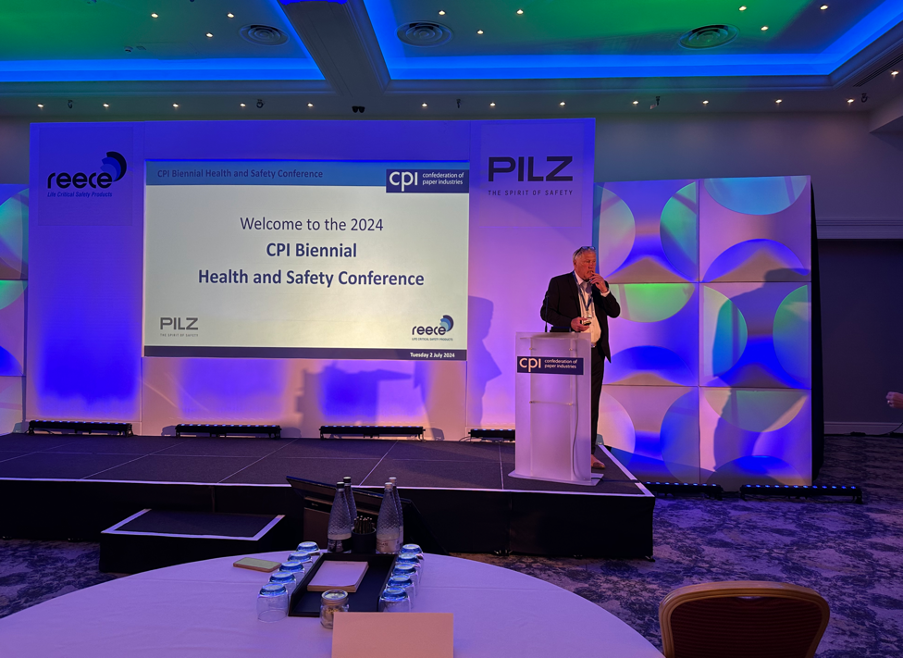
The Confederation of Paper Industries (CPI) is pleased to announce the successful conclusion of the 2024 Biennial Health and Safety Conference, held on July 1-2, 2024, at the Chesford Grange Hotel.
180 delegates from all operational levels within the industry attended this year’s conference, which focused on the three objectives in the new Paper and Board Industry Advisory Committee (PABIAC)
Strategy – Health and Safety – it’s in our hands.
With a strong line-up of expert and influential speakers delivering the breakout sessions, and supported by sponsors and exhibitors showcasing the latest advancements in health and safety, this year’s event had something for everyone.
The conference started with a warm and vibrant welcome to delegates, with Andrew Braund, CPI Director of Health & Safety, taking the spotlight to deliver an enthusiastic introduction.
Opening the conference this year was Jo Moffatt, Strategy Director of Engage for Success (EfS) who delivered an outstanding presentation about the EfS movement and its origins 10 years ago. Jo discussed the Four Enablers for successful employee engagement: visible leadership, engaging managers, giving employees a voice, and organisational integrity. These factors support PABIAC's message to the industry that effective leadership, engagement, and collaboration are crucial for achieving success in delivering the strategy.
This message was further reinforced when, following Jo’s presentation, the PABIAC Chair, Brian Lister, addressed the delegates and invited the whole of the UK’s Paper-based Industries to commit to signing a joint agreement with their trade union / employee representatives to work together on delivering the objectives in the strategy.
After a brief intermission, the morning sessions kicked off with a burst of energy, featuring dynamic workshops on each of the PABIAC objectives. Topics covered Preventing Maintenance Error, Collating & Measuring H&S Performance in Relation to Psychosocial Risks, and Engaging Discussions on Mental Health Conversations and Awareness. Following a lively lunch break, the afternoon continued with innovative sessions including AI in Action - Revolutionising Health and Safety Practices, Avoiding the Blame Game in Accident Investigation, and Connecting Employee Wellbeing with Business Performance and Safety Culture. Each session was designed to inspire and empower, leaving attendees ready to implement the techniques and lessons learned from the sessions.
After a final short break, Carole Spiers, Chair of International Stress Management Association UK, took the stage for her highly anticipated plenary session, "Show Stress Who's Boss!" Carole captivated the audience with her insights on mitigating the costs of stress by understanding its causes and recognising stress symptoms in oneself and others. Carole led a dynamic discussion on using internal and external resources to cultivate a positive workplace culture and effectively address psychosocial issues.
In his closing address, Kevin Bussey, CPI President, thanked everyone for making this year’s event such a success and committed “CPI to working with the industry to implement the strategy and drive the step change improvements in health and safety that our employees, our industry and ourselves have every right to expect.”
Director of Health and Safety Andrew Braund said: “The CPI Biennial Health and Safety Conference isn't just about compliance; it's about cultivating a mindset of excellence, resilience, and care. It's about championing a future where health and safety isn't just a priority or about competitiveness, but a fundamental value ingrained in the fabric of our organisations and communities.”
ENDS
For further information contact Elisse Hare (
[email protected]).
Notes to Editors
Full details of the
PABIAC Strategy 2023 – 2027
CPI is the leading trade association representing the UK’s Paper-based Industries, comprising paper and board manufacturers and converters, corrugated packaging producers, makers of soft tissue papers, and collectors of paper for recycling.
CPI represents an industry with an aggregate annual turnover of £13 billion, with 56,000 direct and a further 59,000 indirect employees.